Every summer activity in Panama City Beach sells the same thing: relief from the heat. Most of them don't deliver it. A beach chair gives you shade and calls it cooling. A pool gives you water at the temperature of the air. A jet ski gives you thirty miles an hour of moving air over wet skin, which is the only honest cooling system on offer. That's the argument, and it holds up.
Still air is the problem
Your body cools itself by getting rid of heat, and it has two routes: radiation and evaporation. Radiation needs a temperature difference, and on an August afternoon the air and the sand are both working against you. Evaporation needs dry air moving across wet skin. On a still day at the beach, the air is neither moving nor dry.
So you sit in the shade and you're still hot, because shade blocks the sun but does nothing about humidity or airflow. That's why an afternoon on the sand leaves you tired rather than refreshed. Nothing was actually removed. It was just blocked.
What speed does to a hot afternoon
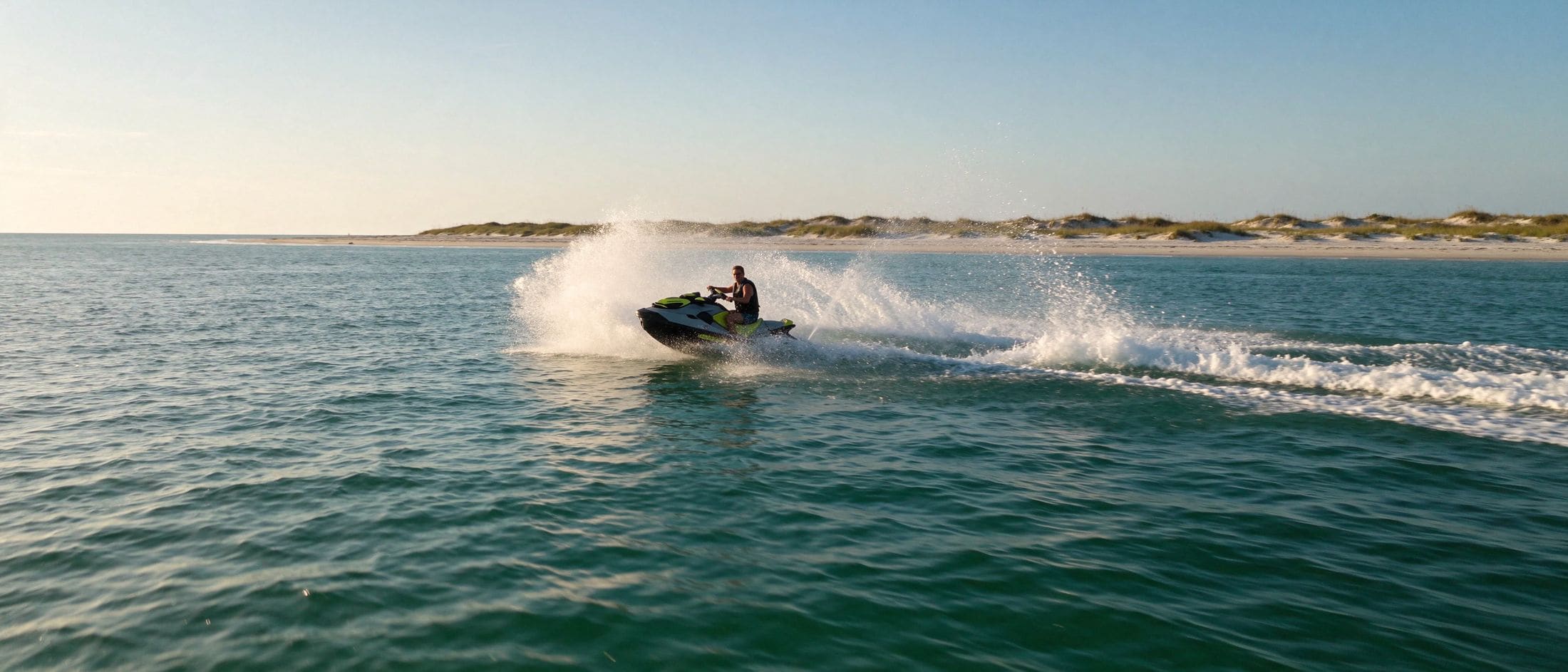
Now put yourself on a ski. The apparent wind you feel is roughly your speed plus whatever the real wind is doing. At 25 mph you have 25 mph of air crossing your body. At 35 you have more. Moving air strips the thin layer of warmed, humid air that sits against your skin and keeps replacing it with drier air, which is exactly what evaporation needs to work.
That's the whole trick, and it's why the first hundred yards of a ride feel like walking into a different season. Nothing changed about the temperature. Everything changed about the airflow. A jet ski is a machine for generating wind, and wind is what your body was missing.
Spray is the second cooling system
Then the water arrives. Spray over the bow, a wet deck, the splash when you cross your own wake. That's not just fun, it's the other half of the mechanism: water on your skin evaporating into moving air, pulling heat out as it goes. The more surface area that's wet, the more cooling you get.
This is why a rash guard beats a t-shirt, and why people who ride in July come back grinning while people who sat on the sand come back flat. The ride keeps re-wetting you and the speed keeps drying you. It's a loop, and it runs for as long as you keep the throttle open.
Why two hours is the right dose
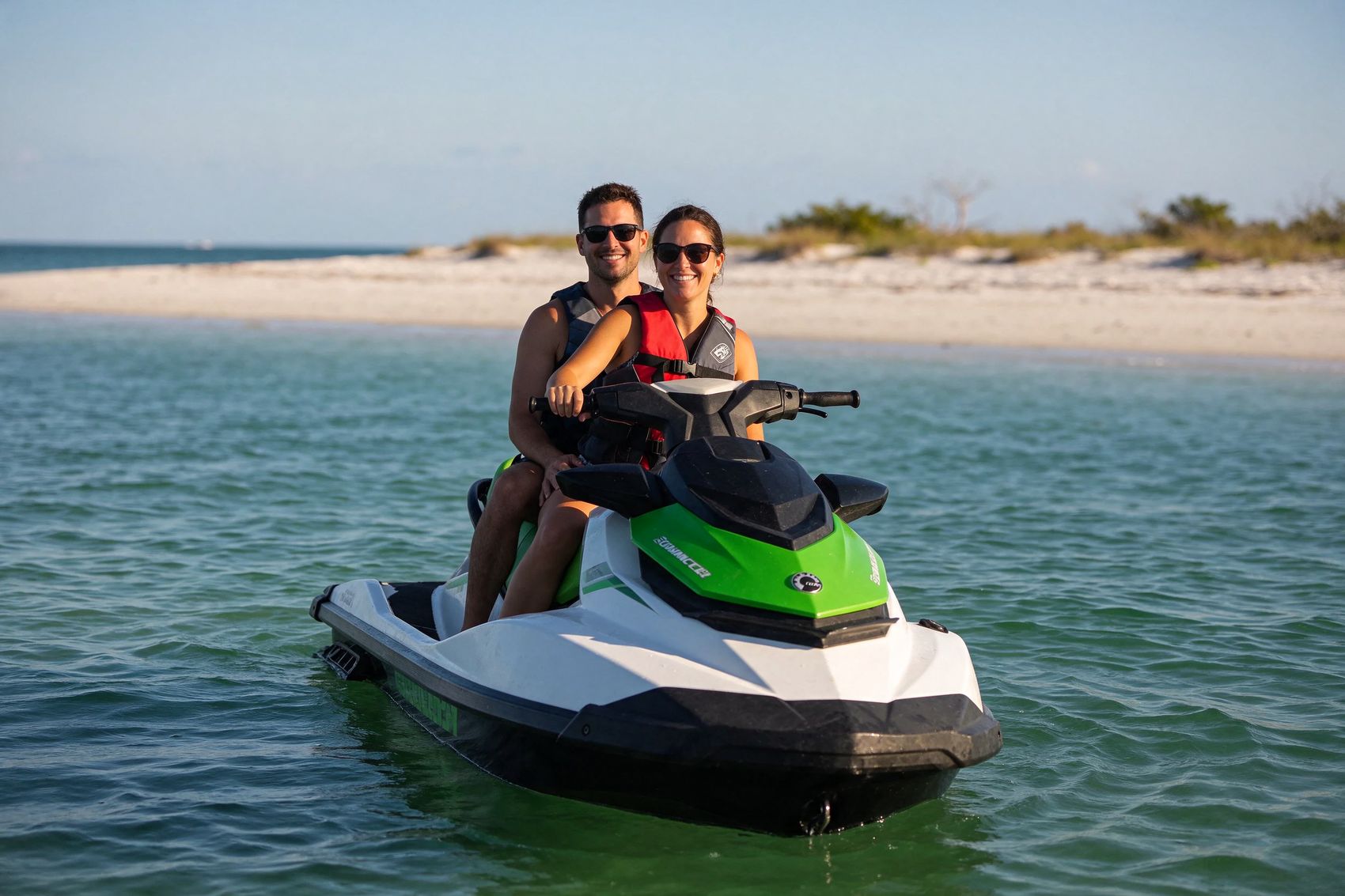
Cooling has a limit, and so does sun. Two hours is the sweet spot: long enough to bring your core temperature down and get the salt out of your hair, short enough that you're not cooked by the end of it. Our tour is built around that window, and the shape of it matters. About 45 minutes following a guide through St. Andrews Bay looking for bottlenose dolphins, a stop at Shell Island to swim and shell, then about an hour of free ride at your own pace before the guide regroups the group 15 minutes out.
Look at that structure from a heat perspective. The guided leg is the fast, airy part. The island stop is where you get properly wet and cool down in the shallows. The free hour is the part where you choose your own speed, which means you choose your own airflow. Then you come in before the afternoon turns on you. That's a better heat plan than anything you can buy on the beach, and it starts at $129 per ski for two riders, fuel and gear included.
The sand is a radiator
One more point, because it's the one people argue with. Sand gets hot and stays hot. It holds the day's heat and gives it back at you from below while the sun works from above and the water reflects it back at your face. Three sources, no airflow. That's the actual condition of a beach afternoon in July.
Water does the opposite. It absorbs heat rather than bouncing it, and it moves. Even sitting still on a ski in the middle of the bay you're cooler than sitting in a chair on the sand, because you're surrounded by a heat sink instead of a heat source.
What this means for your day
Move the water to the middle of the day and the beach to the edges. Ride in the morning when the bay is glass and the air is cool, or ride late when the light goes gold and the heat breaks. Then spend the worst two hours of the afternoon doing something that involves shade, food, and a cold drink, because that's the window where the sun wins.
Or do the opposite of what everyone else does: take the two-hour slot at 1 p.m., when the beach is at its worst and the bay is empty, and let thirty miles an hour do the work. It's the same water either way. One of you comes back cool.
Call (850) 541-6879 and ask which slots are open, then read the full tour breakdown. Bring a rash guard and a bottle of water. The bay handles the rest.