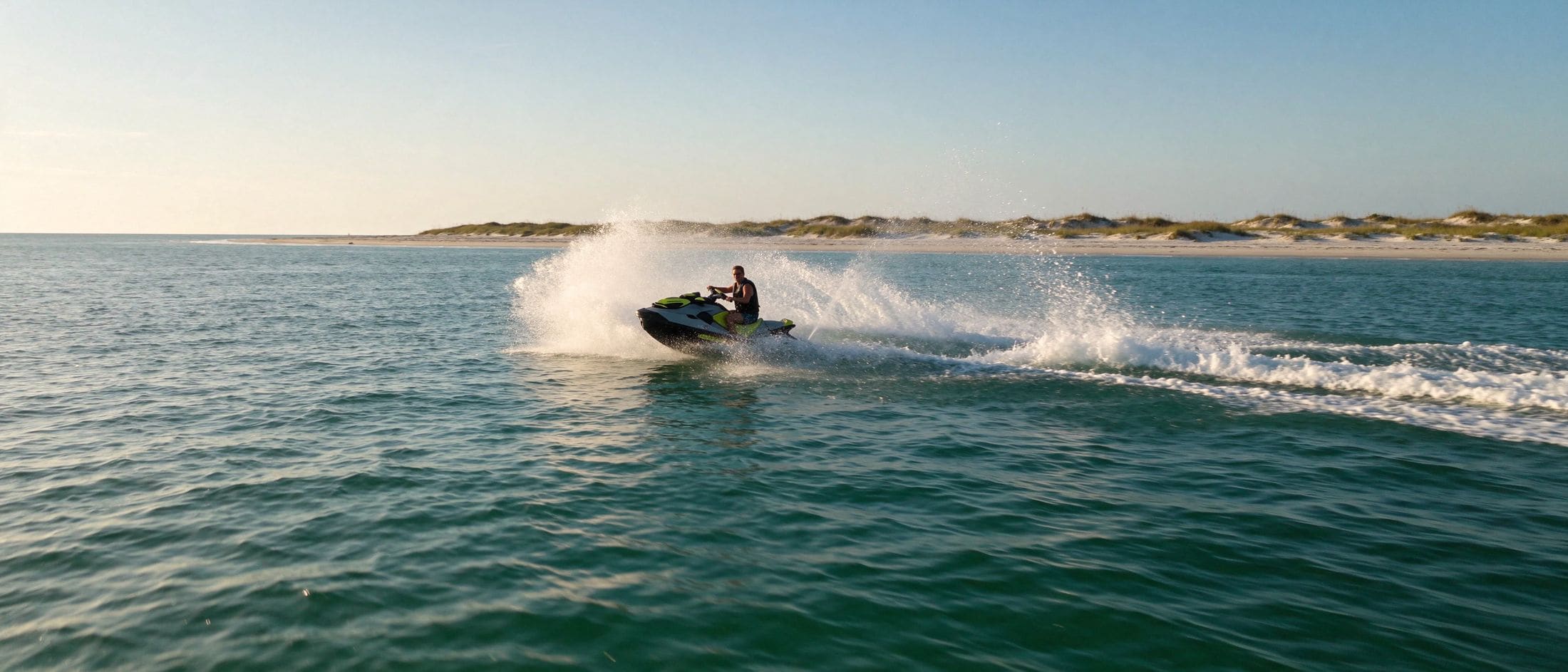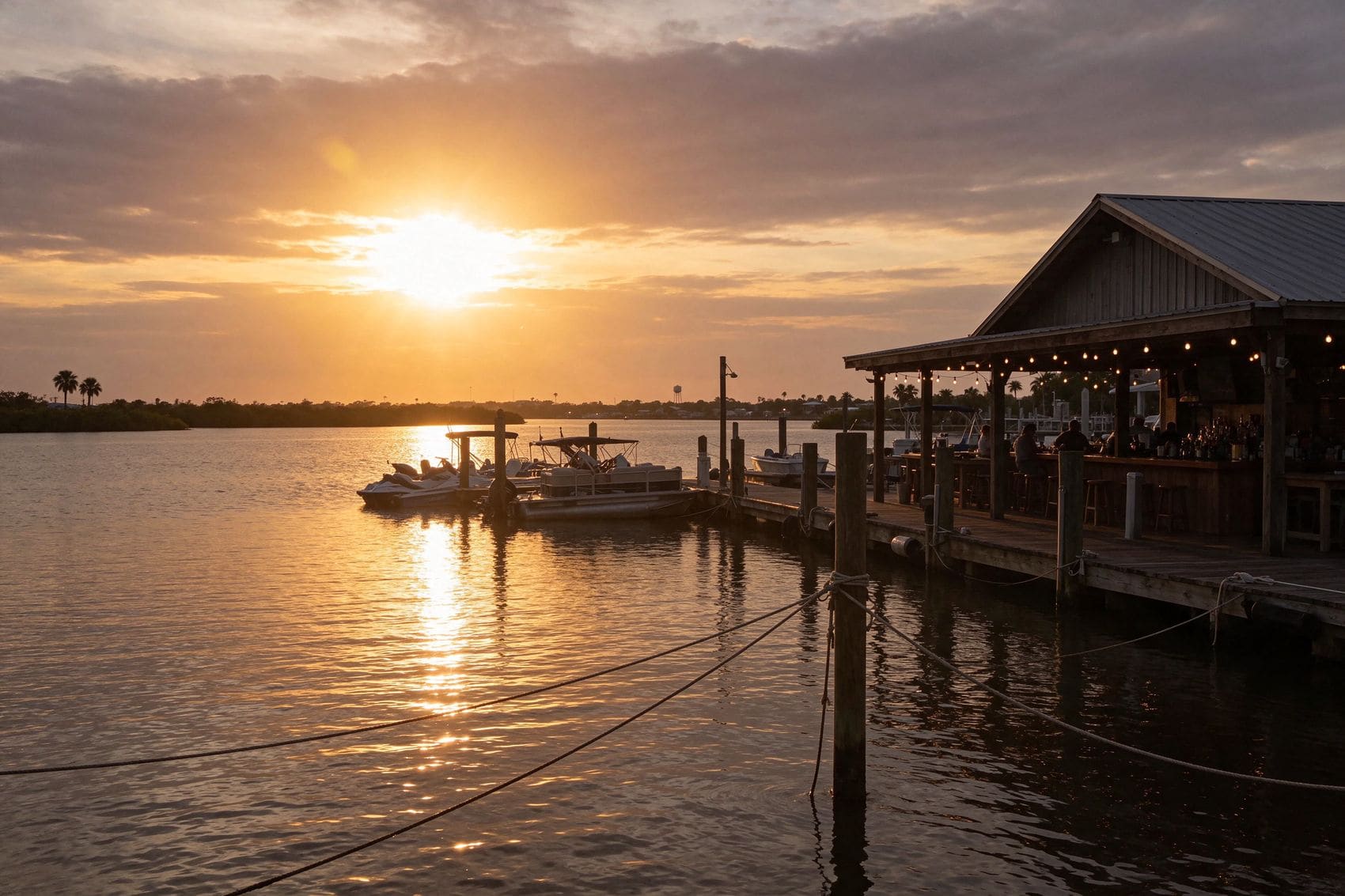
Dolphins do not spread themselves evenly across 45 square miles of bay. They work edges: the seam where the bay drains into the Gulf, the drop beside a channel, the bait that stacks against a tide line. Learn four or five places like that and you stop scanning the whole horizon and start looking in the right 100 yards. This is the geography we ride, place by place.
The pass, where the bay drains into the Gulf
This is the first stop on almost every tour, and not out of sentiment. Tidal water moving between bay and Gulf carries bait, and bait carries dolphins. On a falling tide the current runs one way; on a rising tide it reverses. Either way fish stack along the edges of that flow, and dolphins work those edges in short, fast runs.
It is also the roughest water around when wind opposes tide, chop stacked short and steep. That is why the guided run goes into the Gulf "when conditions allow" instead of on a timetable.
This is where the first 45 minutes of the tour usually go. The guide leads the group here first, works the tide edge in slow passes, then decides whether the Gulf is open enough to push through or whether the bay is the better bet that morning. Either way you are on the right seam.
The open bay: travelling, not feeding
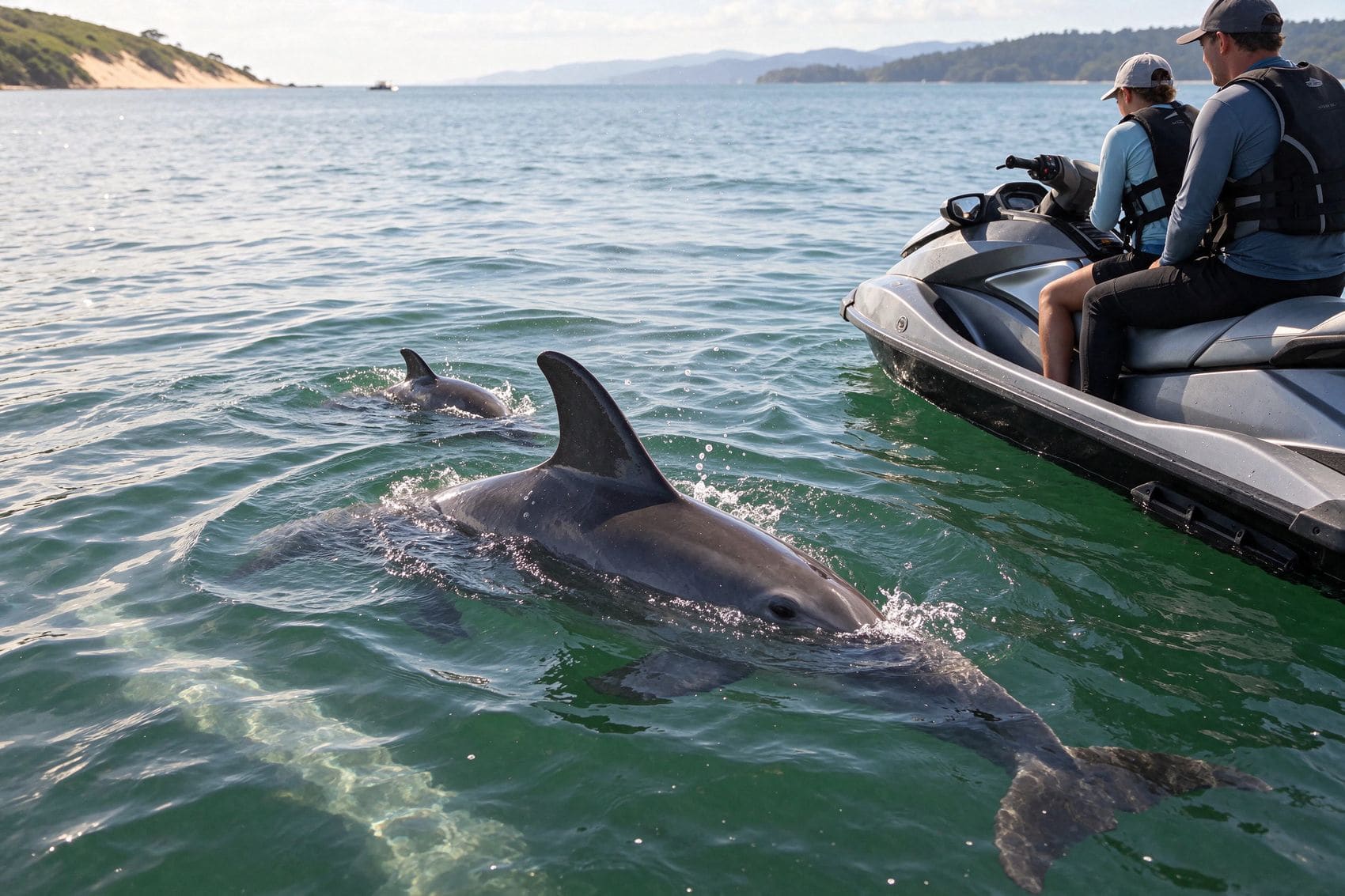
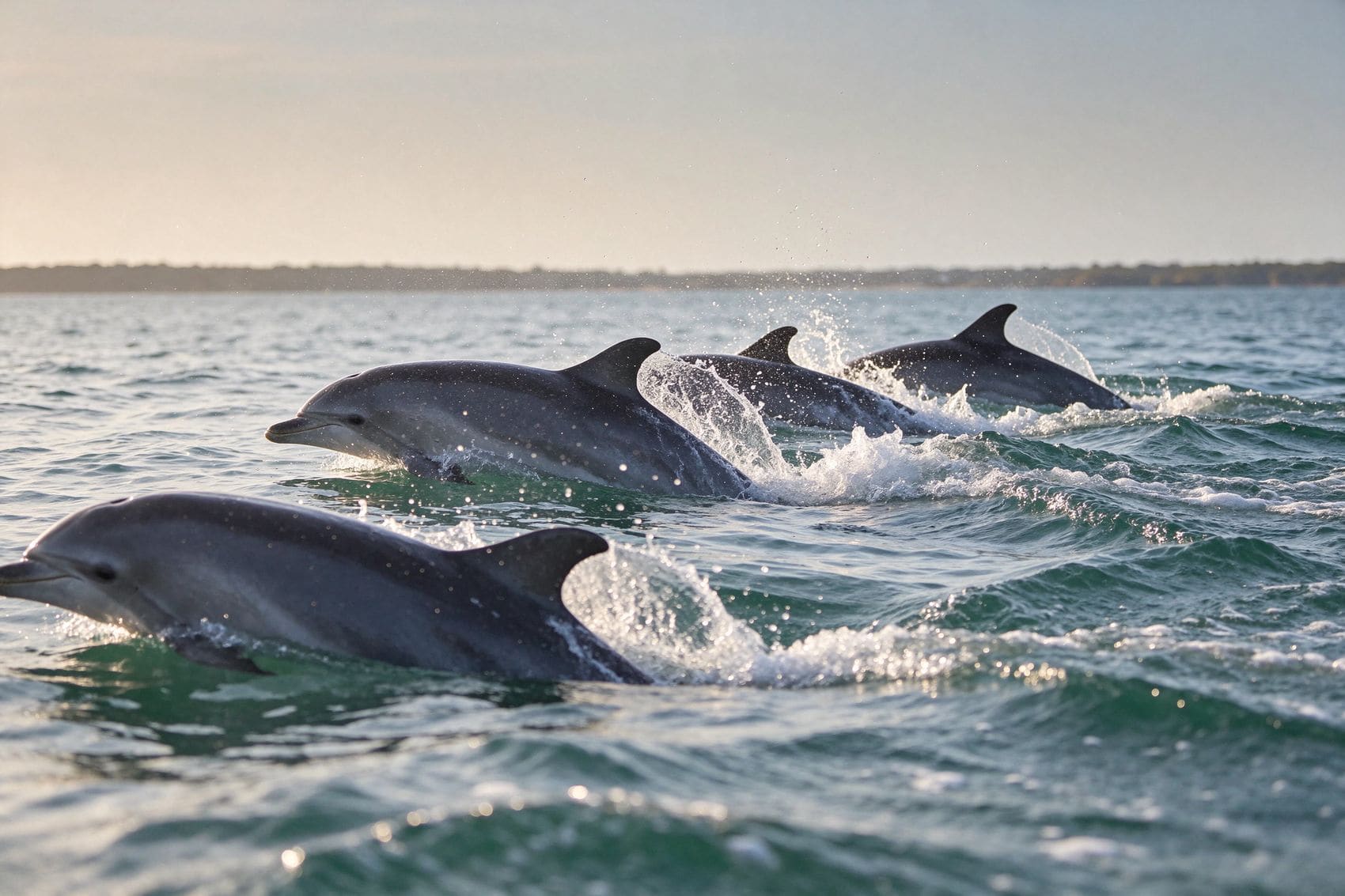
Out in the middle, dolphins are usually going somewhere. You will see them in loose groups, surfacing on a steady rhythm, covering water. A travelling pod is not interested in you, and following one burns fuel and patience. Cut the engine, drift, and let them choose. When they do come over, they come all the way. Montana: "we had dolphins within 2 feet of our ski on our free time."
Where the middle gets interesting is structure: channel edges, deeper holes, anywhere two currents meet and bait gets pinned.
Range is not the constraint here. A ski at cruise covers water quickly and the bay is 45 square miles, so you can be anywhere in it inside twenty minutes. Attention is the constraint. Two riders scanning one horizon beat one rider scanning everything.
Shell Island's Gulf side
Shell Island is about 700 acres of undeveloped barrier island, roughly 10 minutes from our dock. The Gulf side carries cleaner water and more bait, and dolphins run that beach line close enough that people standing on the sand see them without getting wet. It is also where the tour beaches for the swim and shell stop, so you get a second look at the same water on the way in and out.
The shallows and the sandbars
Dolphins feed in skinny water. They root in the sand, they herd fish against a bank, they use the bottom. If the dorsal fin is barely breaking the surface and there is mud stirred up behind it, that animal is hunting, not playing, and it is worth idling well off and watching. This is also the water where rays and sea turtles turn up, which is what Betsy's group ran into: "We enjoyed seeing several dolphins and a few even saw some sea turtles!"
How to read the surface
You do not need sonar. You need to watch the birds and the small stuff.
- Diving pelicans and terns: bait is being pushed up, and something is pushing it
- A bait shower: small fish skipping across the surface in a line
- A tide line: a streak of foam or debris where two bodies of water meet
- Two or three boats idling in one spot: worth a slow, wide look from a distance
- A rolling, unhurried surfacing rhythm: feeding, not travelling
Read it in that order and you will find more than the people staring straight ahead at 30 mph.
What the guide does with all this
The guided half of the tour is 45 minutes of exactly this: the pass first, then the bay structure, then out into the Gulf if the wind allows. Guides are on this water most days and they are not guessing. They also know when to stop looking and go to the island instead. A two-hour tour with no dolphins and a good swim still beats two hours of circling.
Time of day matters less than wind. A flat morning makes the pass easy to read and the Gulf crossable. By early afternoon the sea breeze has usually filled in, which stacks chop against an outgoing tide and shortens everyone's patience. If you have one morning to spend, spend it early.
When they do not show
Sometimes they do not, and we will not pretend otherwise. Dolphins are wild, they move, and no operator on this coast can promise a sighting. What we can tell you is where they feed, and that we go there first. On the days it works, it works at close range: CJ watched "a pod of dolphins swim directly under our skis."
On a slow day you still get Shell Island, an hour of free riding, and a route map for the next attempt. That is the honest trade, and it is why the partially guided dolphin tour is priced per ski rather than per sighting.
Book the tour and let the guide do the reading, or call (850) 541-6879 if you want to talk conditions before you pick a morning. If you would rather run your own search, the unguided rentals put the same water under you without a leader.