A jet ski has no gears, no clutch and no brakes. That sounds alarming and is actually the reason first-timers pick it up in about four minutes. There are three movements to learn: squeeze, release, and lean. Everything else is water. Here is the honest beginner briefing, minus the parts you will forget anyway.
You board from a dock, not a beach
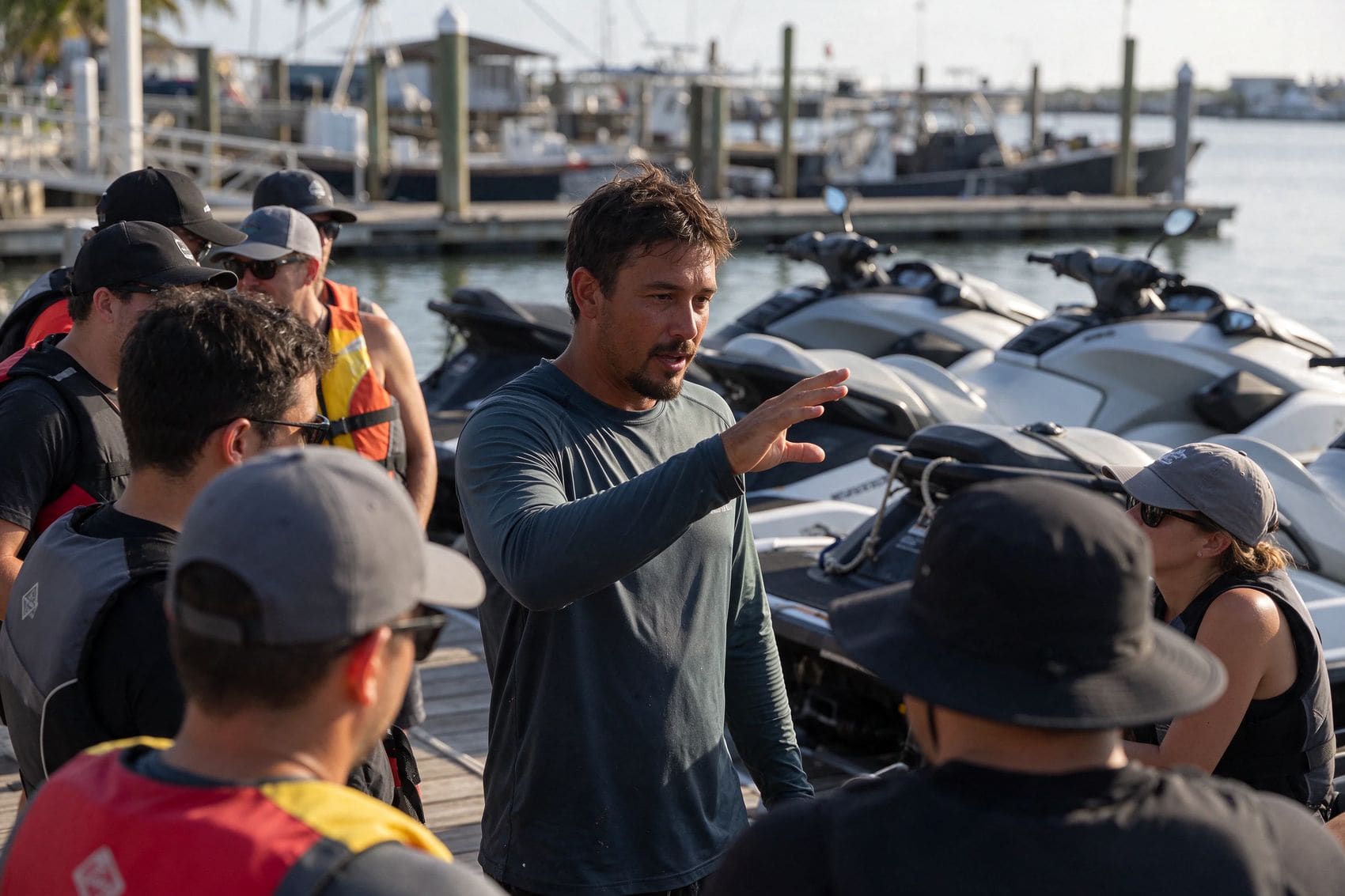
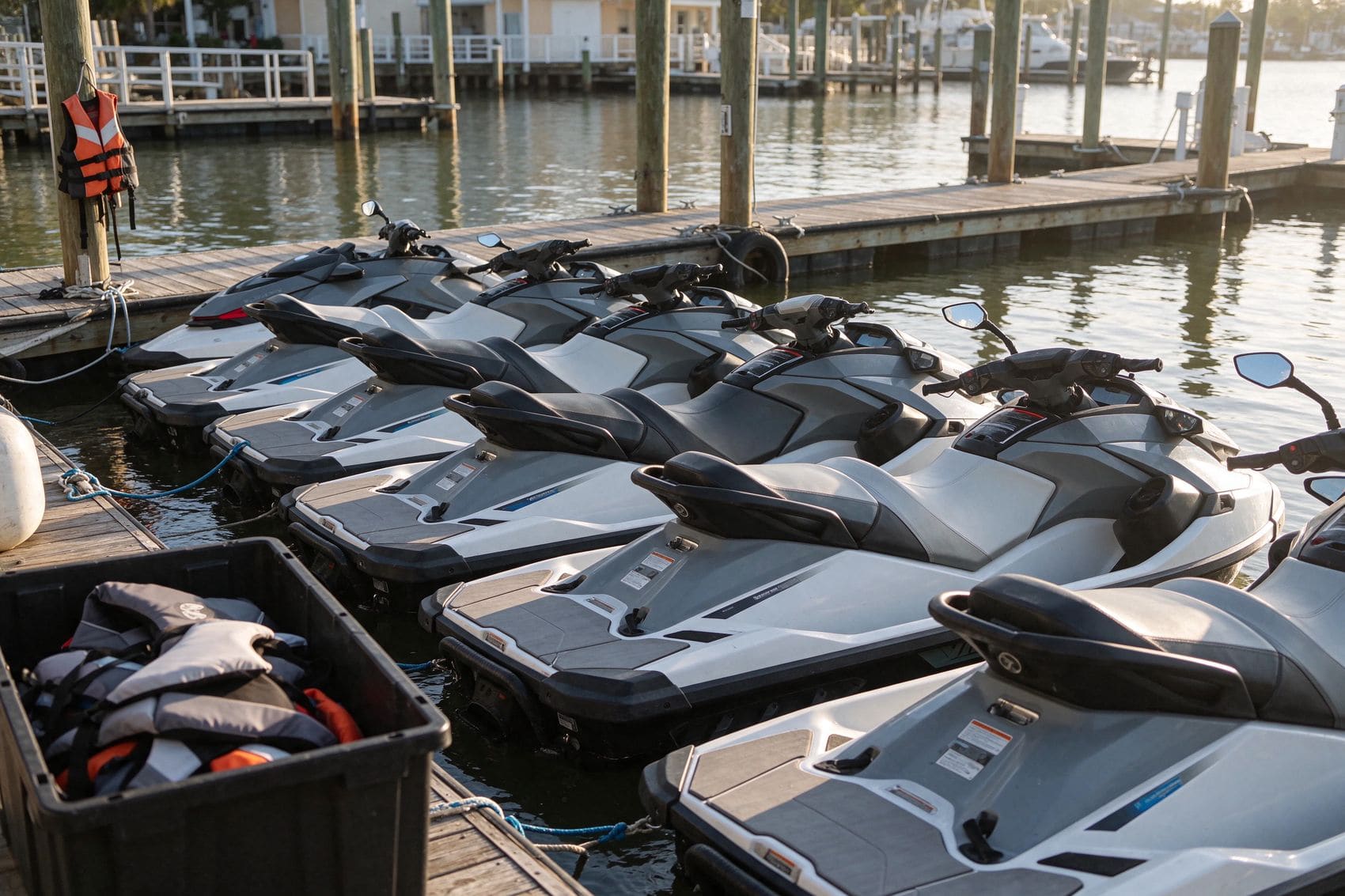
Our skis launch from a marina at Papa Joe's Bayside, which is the single best thing about learning here. No surf to punch through, no crowded ramp, no waves breaking over the bow while you figure out where to sit. You step down onto the ski while it is tied, sit, feet in the footwells, hands on the bars, and idle away. That is the whole launch.
Getting back on after a swim is the same motion in reverse: engine off, approach from the rear, take the handle, pull up. Practise once near the dock while the water is flat. Nobody looks graceful doing it, and nobody cares.
The throttle is the only control that matters
Right hand, trigger-style lever. Squeeze to accelerate, release to slow down. There is no brake, so you plan your stops by easing off early rather than grabbing at anything. The ski also has a lanyard clipped to your jacket: if you come off, the engine dies immediately.
Two things surprise beginners. First, the ski is more stable at 20 mph than at 5 mph, because forward motion gives the hull something to work against. Second, letting off the throttle mid-turn takes away your steering, because a jet ski steers by pushing water out the back. No thrust, no turn. If a turn starts feeling wide, squeeze a little throttle rather than less.
The first five minutes are the learning curve. Idle clear of the marina, then hold a steady 15 to 20 mph in a straight line until the hull feels predictable under you. Almost everyone is comfortable before the group reaches the pass.
Wear a swimsuit or quick-dry shorts, a shirt for the sun, and sunscreen on the tops of your feet, which is the burn nobody plans for. Leave the hat in the car unless it has a cord on it.
Turning: aim, squeeze, lean
Look where you want to go, not at the nose. Push the bars that way and keep the throttle on through the turn. Lean your upper body into it slightly, and keep both feet planted. If you are carrying a passenger, tell them before you turn, not during.
Do not fight the bars. A death grip with a closed throttle gives you the widest turn of your life, and then the ski straightens out and you are pointing at whatever you were trying to avoid.
Wide, lazy S-turns are the beginner drill. Do those for ten minutes and you will understand the hull better than any explanation can manage.
Who sits where, and the weight limit
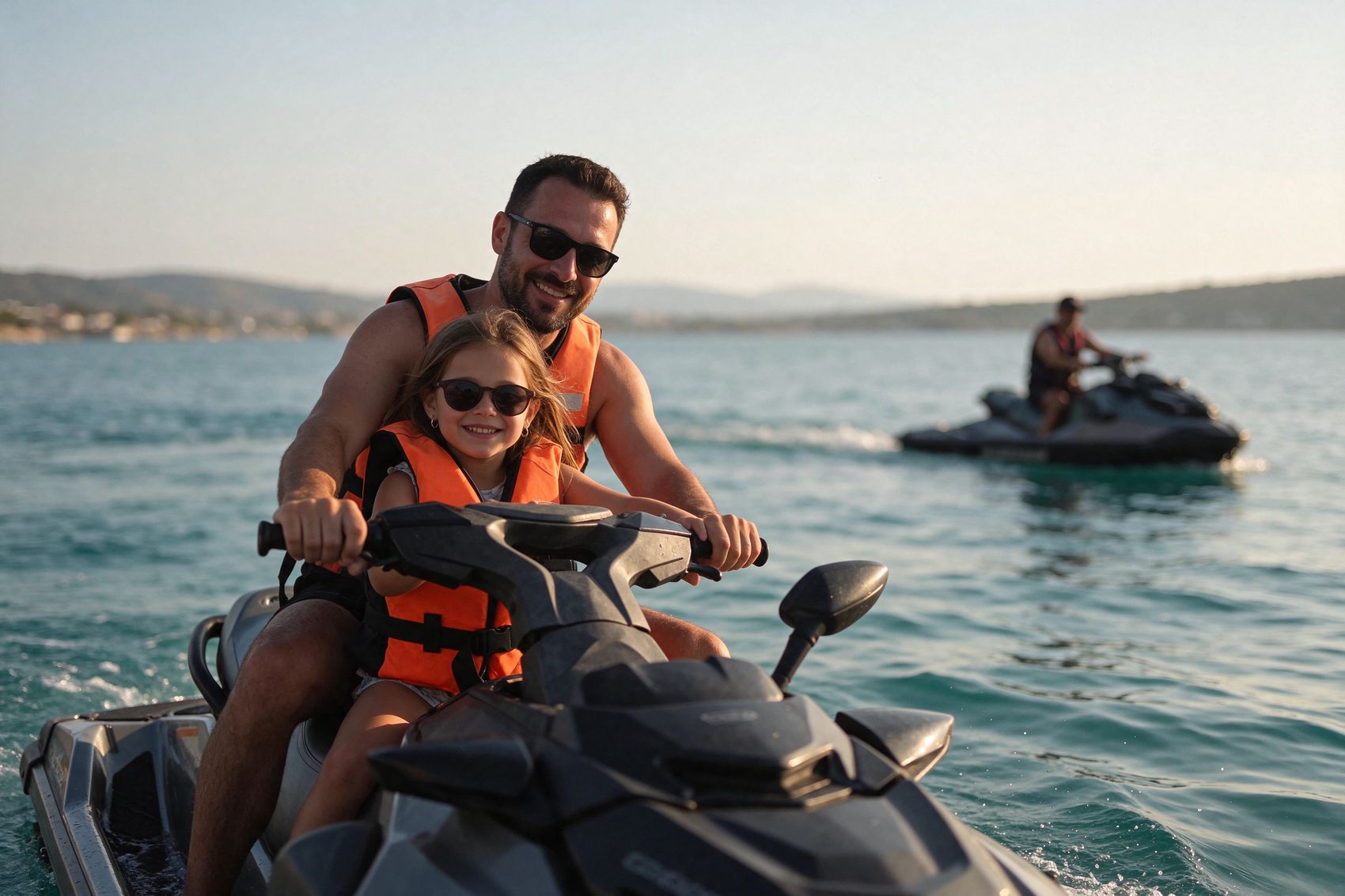
Two riders per ski, 350 pounds combined. Driver must be 18 or older with a valid driver's license on the guided tour. Passengers 5 and up are recommended. If you are a couple plus a cooler plus a wet bag, weigh the arithmetic before you assume you are under the limit.
Passengers should hold the strap or the rider in front, keep their feet in the footwells, and lean with the driver. A passenger who leans the wrong way in a turn is the most common reason a ski feels tippy.
If you are nervous, say so
Nervous riders are the normal case, not the exception. Ashley wrote: "I had zero experience on a jet ski and was pretty nervous. The guide did a great job looking out for us slower people. By the end, I was keeping up with everyone else fine."
That is what the guided tour is built for. You follow a guide rather than navigate, the pace is set by the slowest rider, and nobody gets left behind. Guides are named in reviews for exactly this. Jaxson: "Nick did an excellent job being so patient especially with the beginner riders." Velvet: "First time riders of jet skis. Very informative and took his time explaining how to operate the jet ski."
What your first ride costs
The partially guided dolphin tour starts at $129 per ski for two hours, up to two riders, and includes fuel, life jackets, safety equipment, a route map, a guide, and full instruction. No experience required. The $250 deposit is a refundable hold on a card, not a fee, and no cash is accepted for it.
Unguided rentals are a different product with different rules: 21 or older, prior experience expected, and a Florida Boater Education Certificate if you were born on or after January 1, 1988. First-timers should not start there. Start with a guide, then rent unguided later in the week once the bay makes sense. Our boating license guide covers the card if you plan to come back and ride alone.
Call (850) 541-6879 if you want to book a morning with a patient guide, or ask at check-in which side of the group the slower riders tend to sit. We will put you there.